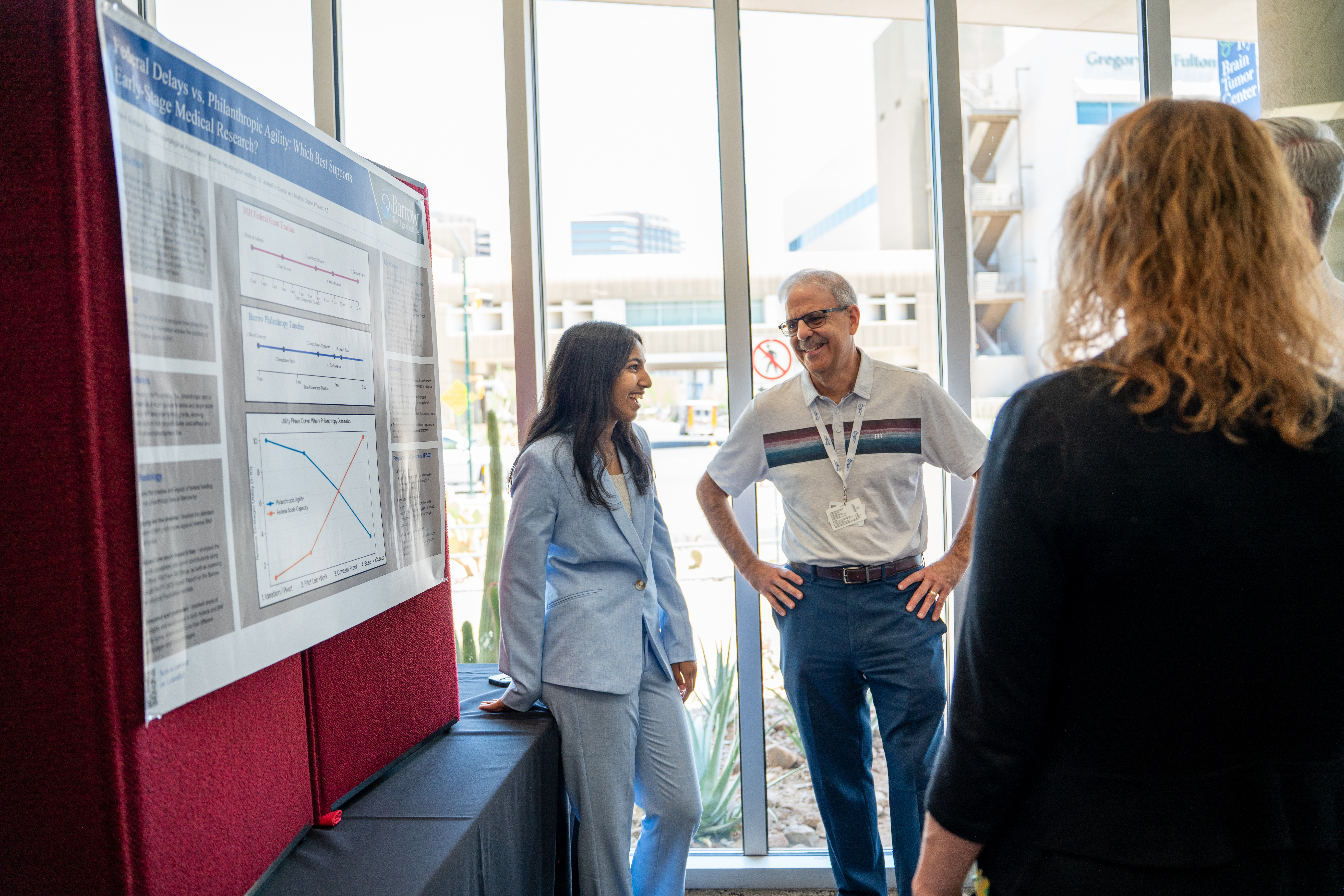
Under the Barrow High School and Undergraduate Internship Programs led by Rita Sattler, PhD, and made possible through the generous support of Barrow Neurological Foundation donors, students delve into the world of neuroscience. Each intern is mentored by a Barrow Neurological Institute specialist and dives into hands-on research, weekly seminars featuring clinicians and scientists, a career day panel, and a capstone symposium showcasing their research project. Interns work in a variety of departments at Barrow, including the Neuroimaging Innovation Center, the Virtual Reality Spine Lab, the Ivy Brain Tumor Center, various research laboratories, and more.
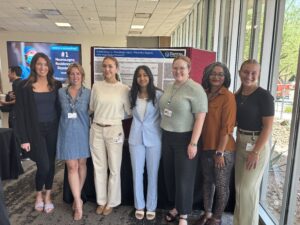
This summer, Barrow Neurological Foundation was proud to host its very own summer research intern, Vanshika Gottam.
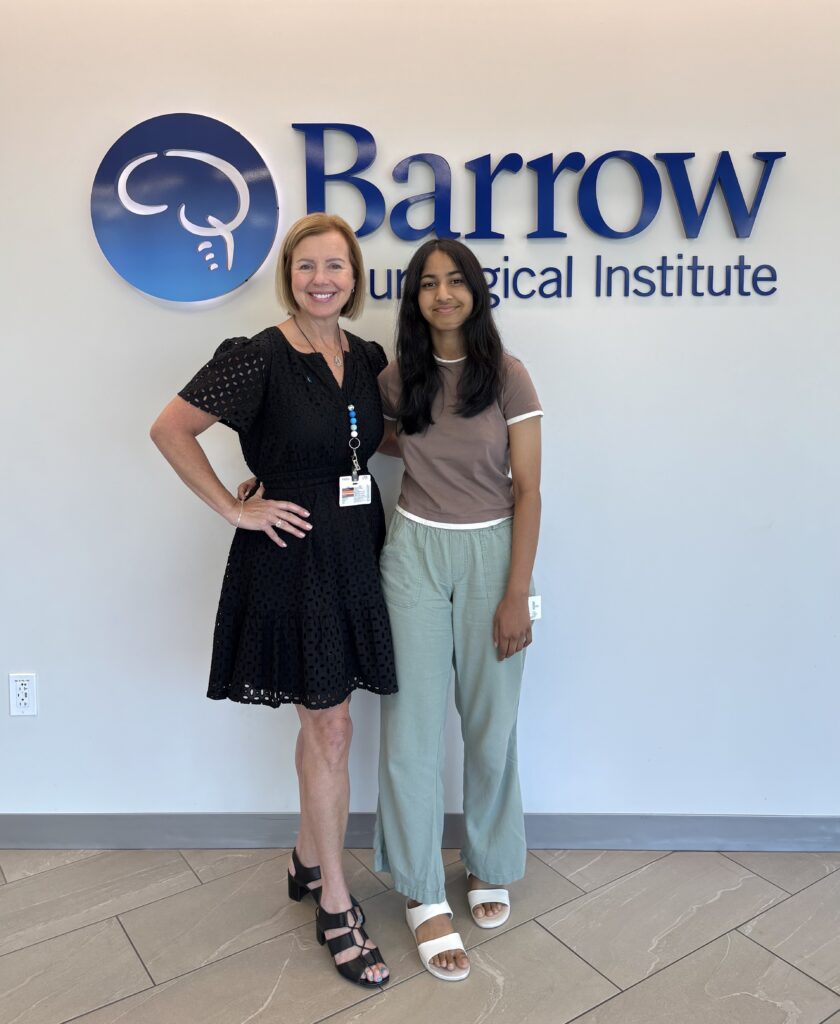
Vanshika’s Experience
Vanshika Gottam, an incoming junior at Mountain Ridge High School, wanted to learn more about neuroscience, especially after watching a close family member live with Parksinson’s Disease for years. Her passion for neuroscience and her curiosity to learn more drove her to apply for the High School Summer Research Internship, where she gained insight into neuroscience philanthropy at Barrow Neurological Foundation under the mentorship of Amanda Eisen, Manager of Philanthropy.
During her time at the Foundation, Vanshika had the opportunity to learn from Major Gift Officers, interview with doctors, attend and shadow meetings, tour the Barrow campus, and develop transferable skills. As Vanshika states, “The Foundation is like the backbone of the Institute, so it was really cool to work behind the scenes.”
Vanshika reflected upon a memorable experience at the Foundation, a tour of the Ivy Brain Tumor Center with Molly Tlas, Director of Philanthropy. During the tour, Vanshika learned about Phase 0 clinical trials at the Ivy Center and how its scientists are researching drug therapies to treat glioblastoma and other incurable brain tumors. Vanshika noted that one of the most fascinating concepts to her was the Ivy Center’s emphasis on drug modification.
“One of the main reasons I was fascinated is because they were trying to modify the drugs so they don’t affect any other parts of the brain, and so that they can cross the blood-brain barrier.”
Researching Federal and Philanthropic Funding
When Vanshika wasn’t attending meetings, touring centers, or assisting with philanthropy projects, she was busy researching and creating her project titled “Federal Delays vs. Philanthropic Agility: Which Best Supports Early-Stage Medical Research?” Primarily, Vanshika wanted to study federal funding, including channels like the National Institutes of Health (NIH), in comparison with philanthropic funding provided by Barrow Neurological Foundation. She was curious about the differences in timelines and grant awarding processes between federal and philanthropic funding, and she set out to explore which method is most effective for early project development.
Vanshika looked at the timeline of NIH grant cycles, internal Foundation grant cycles, official IRS Form 990 filings, and the Foundation’s 2025 Impact Report. She found that while both channels of funding have their pros and cons, ultimately, philanthropic funding from Barrow Neurological Foundation allows researchers to fare better in early project development, explaining in her poster that “The Foundation is an important driver in medical research and helps to expedite seed-funding at a faster rate compared to federal funding.” Furthermore, philanthropic funding allows researchers to begin their work earlier and share valuable findings with the public sooner than federal grants allow for.
Vanshika expressed that completing this project taught her a lot about research funding, application timelines, and philanthropy. She learned that philanthropic and federal funding can also go hand-in-hand to assist researchers in scaling their findings to the general public. She was shocked to learn, though, how long the application process is for federal funding as well as peer review processes, and how competitive the entire research grant process can be.
“Now I know that philanthropy funds a lot of researchers and their projects here. I think it’s really great because we have a chance to talk to donors. We have the chance to communicate and provide outreach and awareness. All of those donations are actually contributing to a cause,” Vanshika says.
Interviewing Dr. Saulena Shafer
Vanshika expresses that the highlight from her internship experience was interviewing Saulena Shafer, DO, a movement disorders neurologist in the Muhammad Ali Parkinson Center. Vanshika learned all about the Barrow Deep Brain Stimulation & Focused Ultrasound Program. Deep brain stimulation (DBS) involves surgically placing an electrode in a targeted area of the brain which can then be programmed by neurologists to adjust symptoms of Parkinson’s disease, essential tremor, and dystonia. She learned that this innovation progressed from a large machine inserted into the brain into a small microchip.
“From Dr. Shafer, I learned a lot about deep brain stimulation, which reduces tremors in Parkinson’s. I found that really interesting, especially with how it developed over the past 40 years and how it is now,” she says.
Vanshika went into the interview brimming with questions about Parkinson’s, but she expressed how she also learned so much about perseverance, passion, and building a career. Dr. Shafer shared with Vanshika about her genuine interest in her patients, stating that the most valuable part of her career was interacting with patients. She advised Vanshika that in order to have a successful career in medicine, she should learn to understand people, be willing to ask questions, and be open to opportunities.
Vanshika’s Takeaways
Overall, Vanshika is grateful for her time spent at Barrow Neurological Foundation. From her day-to-day research and tasks, she developed a plethora of skills that she believes will aid her substantially in her educational and professional career. She learned how to stay organized, often balancing multiple projects at once, which she equates to balancing assignments and homework in a school setting. She recounted how the experience taught her the importance of collaboration, punctuality, teamwork, and communication, especially in relation to donors. From the philanthropy team, Vanshika notes that she learned “it’s really useful to be enthusiastic and passionate about your work.”
When asked what her favorite part of the internship program was, Vanshika simply responded, “working with all of you.”
We are thankful for Vanshika’s everlasting passion and eagerness to learn and contribute to the team at Barrow Neurological Foundation, and we thank all of the donors who continue to fund educational experiences like Vanshika’s for students worldwide!