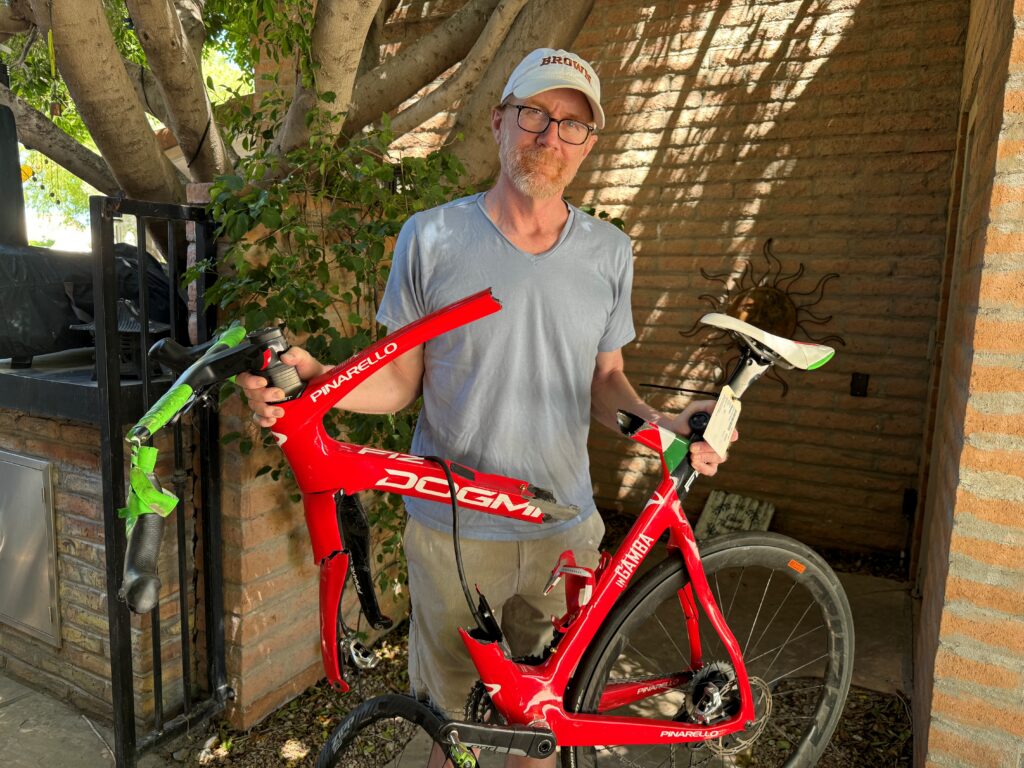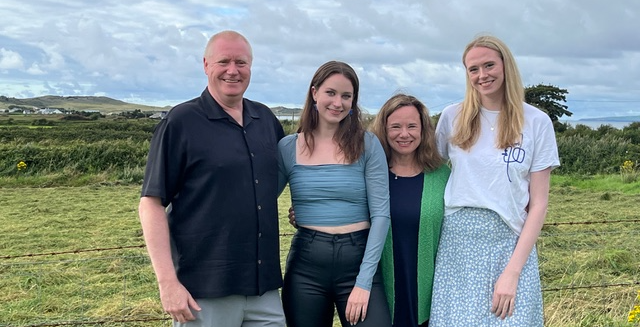
In February 2024, college freshman Brielle May came home to her parents’ house for a long weekend. She had been battling a bad case of the flu and thought a few days of rest in her own bed might help. By Sunday night, she felt like herself again and planned to return to campus the next morning. She never made it there.
Six weeks later, Brielle slowly emerged from a coma in the Neuro-Intensive Care Unit at Barrow Neurological Institute, her life forever changed.
A Grim Outlook
 Although Brielle doesn’t remember that fateful day, her mother, Kara, and her father, Jeff, certainly do. “Brielle was on the floor having a full-on tonic-clonic seizure, and she completely lost consciousness,” Kara recalls. “It was the most terrifying moment of my life.”
On the ambulance ride to the hospital, Brielle had five more seizures that couldn’t be stopped. She was intubated immediately upon arrival and taken back to the intensive care unit, where her parents remained by her side, begging her to wake up.
A week later, Brielle was still in a coma with no signs of improvement. Her doctors told Jeff and Kara that they had exhausted all available resources and there was nothing more they could do. That’s when they recommended transferring Brielle to Barrow, a facility renowned for its expertise in the specialized care that she needed.
When You’re Here, There’s Hope
After hearing about Brielle’s case, Barrow promptly accepted her for care. When she arrived at Barrow’s Neuro-ICU, a team of neurocritical care specialists rushed to her side. Among them was division chief Ruchira Jha, MD, MSc, along with neurologists Patrick Crooks, MD, Aditya Kumar, MD, and Nassim Matin, MD. They moved with urgency to stabilize Brielle, maximizing every precious second.
The doctors refused to give up on Brielle and assured her parents that they would fight for her until the very end, not backing down unless her organs were failing.
“It gave me hope knowing that they were willing to try anything and reached out to all their networks local and abroad to find a solution”, Kara says.
After a rigorous process, the doctors secured FDA approval for a compassionate-use drug, which is only granted to extremely ill patients who have no other treatment options. Given Brielle’s critical state, they had it flown overnight to Barrow.
The drug, coupled with countless other treatments, worked. After six weeks in a coma, Brielle slowly began to wake up.
A Long Road Ahead
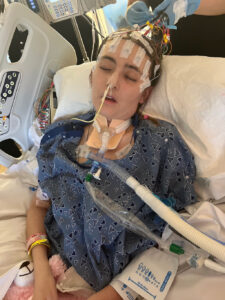
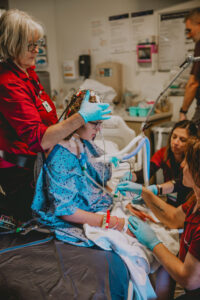 Confused and disoriented, Brielle had no idea what had happened or how much time she had lost. All she knew was that she was in the hospital, unable to move, and had a breathing tube and countless other tubes and wires attached to her.
The deficits caused by the seizures and coma were severe, and Brielle had to relearn everything from breathing and talking to brushing her teeth and putting on makeup. She also experienced devastating memory issues. “I had forgotten who many of my friends were. But they still visited me every day, bringing me pictures of us doing things we loved, and many of those memories came back,” she says.
Brielle spent a total of eight weeks in Barrow’s Neuro-ICU. During that time, her neurocritical care physicians became like family, guiding her through challenges, encouraging her progress, and supporting her emotionally.
“When I first woke up, I would have severe panic attacks every night. Without fail, my doctors took the time to sit with me until they subsided, making sure I knew that I wasn’t alone. They truly cared about me as a person, and that meant everything,” she says.
There’s No Place Like Barrow

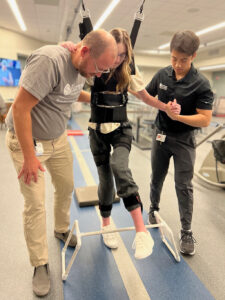
 Brielle’s recovery has been remarkable. Less than a year later, she’s taking her college classes online and continuing outpatient rehabilitation.
Kara says she will be forever grateful to the neurocritical care team for bringing her daughter back. “Despite it being such a dark time, there was so much beauty in the care, compassion, and thoughtfulness we experienced. I couldn’t imagine going anywhere other than Barrow.”
A Grateful Family Gives Back
In February 2026, almost two years after beginning her medical journey, Brielle and her family held the “Because of B” walk benefiting the Neurocritical Care Program at Barrow. The inspiring event honored Brielle’s courageous battle with FIRES syndrome—a rare and severe epilepsy disorder—and the phenomenal Barrow specialists who saved her life and continue her ongoing care.
This third-party event was a powerful reminder of how grateful patients and families can bring the community together to support the life-changing work funded by Barrow Neurological Foundation. We could not be more grateful to Brielle, her family, and everyone who participated in the “Because of B” walk!
Join Brielle and her family in supporting the Neurocritical Care Program’s vital work or learn more about hosting your own fundraising event benefiting Barrow.

“It gave me hope knowing that they were willing to try anything and reached out to all their networks local and abroad to find a solution.”
-Kara May
Mother of grateful patient, Brielle May. Neurocritical Care
Related Stories