
Have you ever wondered how your brain learns new skills, recovers from injury, or even adapts to new environments? The answer lies in a remarkable phenomenon called neuroplasticity. Barrow Neurological Institute is at the forefront of understanding neuroplasticity and uncovering new avenues for healing and cognitive enhancement.
What is Neuroplasticity?
Neuroplasticity, often called brain plasticity, is the brain’s ability to form new neural connections throughout life. It allows neurons to compensate for injury and disease and adjust their activities in response to new situations. This fundamental property of the brain underpins learning, memory, and our capacity to adapt.
Why is neuroplasticity crucial for brain function and health? It allows us to acquire new knowledge, master skills, and even cope with significant neurological challenges. Understanding this capacity is vital for developing effective interventions for neurological disorders and enhancing overall well-being.
How Neuroplasticity Works
Mechanisms of Neuroplasticity
The intricate workings of neuroplasticity involve several key mechanisms that allow the brain to constantly adapt. These mechanisms can be broadly categorized into synaptic plasticity and structural plasticity.
Synaptic plasticity refers to the ability of synapses – the tiny gaps between neurons where signals are transmitted – to strengthen or weaken over time in response to activity. This is the foundation of learning and memory. When we learn something new, the connections between specific neurons become stronger, making it easier for those neurons to communicate in the future. Conversely, connections that are rarely used can be weakened or pruned, making the brain more efficient.
Structural plasticity, on the other hand, involves changes in the physical structure of neurons and their connections. These structural reorganizations allow for more extensive and lasting changes in brain function. Together, these forms of plasticity contribute to brain change and the brain’s remarkable adaptability.
Experience-Dependent Plasticity
Role in Learning and Memory
One of the most remarkable aspects of neuroplasticity is its experience-dependent plasticity. This concept highlights how our unique experiences, interactions with the environment, and learning activities directly shape the architecture and function of our brains. Every new skill we acquire, every conversation we have, and every memory we form leaves an imprint on our neural networks.
How do experiences shape the brain? When we engage in new activities or repeatedly practice a skill, specific neural pathways are activated. The “use it or lose it” principle applies here: frequently used pathways become stronger and more efficient, while unused ones can weaken. This process is evident in how children learn language, develop motor skills, and absorb vast amounts of information – their developing brains are highly plastic and primed for experience-dependent change. Even in adulthood, our brains retain some degree of this plasticity, enabling continued learning and adaptation. This constant interaction between our internal neural landscape and the external world ensures that our brains are always evolving and optimizing for our specific needs and environments.
The Brain’s Adaptive Capabilities
Brain Plasticity in Action
Observing brain plasticity in action offers compelling evidence of the brain’s inherent resilience and capacity for change. For instance, patients who suffer a stroke, which can damage specific areas of the brain, often undergo rehabilitation that leverages neuroplasticity. Through targeted therapies, the undamaged parts of the brain can reorganize to take over functions previously performed by the injured areas. This might involve forming new neural connections or strengthening existing ones, allowing individuals to regain speech, movement, or cognitive abilities that were initially lost. This demonstrates how the brain can compensate for injury, provided the right stimulation and environment are present.
Enhancing Neuroplasticity
What activities and habits promote neuroplasticity?
- Mental Stimulation & Puzzles: Consistently engaging in crosswords, Sudoku, chess, or strategy video games challenges memory and attention.
- Mindfulness and Meditation: Meditation and deep breathing reduce chronic stress, a known inhibitor of neuroplasticity.
- Environmental Enrichment & Travel: Experiencing new places, traveling, or learning new cultural information stimulates the brain with unfamiliar stimuli.
- Brain-Healthy Nutrition: A diet rich in leafy greens, nuts, berries, and omega-3 fatty acids supports brain health.
- Prioritizing Sleep: Quality sleep is vital for repairing neurons and consolidating new pathways.
- Social Interaction: Maintaining strong social connections and participating in community groups boosts cognitive resilience.
Neuroplasticity and Rehabilitation
Recovery from Injury
One of the most profound applications of neuroplasticity lies in neurological rehabilitation. After a traumatic brain injury (TBI), stroke, or other neurological injuries, patients often face significant challenges in movement, speech, and cognition.
How does neuroplasticity aid in recovery? When a specific area of the brain is damaged, other healthy parts can step in and take over the functions of the impaired region. This phenomenon, often referred to as cortical plasticity or functional reorganization, means that the brain can “rewire” itself. For example, if a stroke damages the motor cortex responsible for limb movement, intensive physical therapy can stimulate adjacent healthy brain tissue to form new neural connections, gradually restoring some of the lost motor function. This incredible ability of the brain to adapt is why rehabilitation is so crucial – it provides the necessary stimulation to guide this internal reorganization.
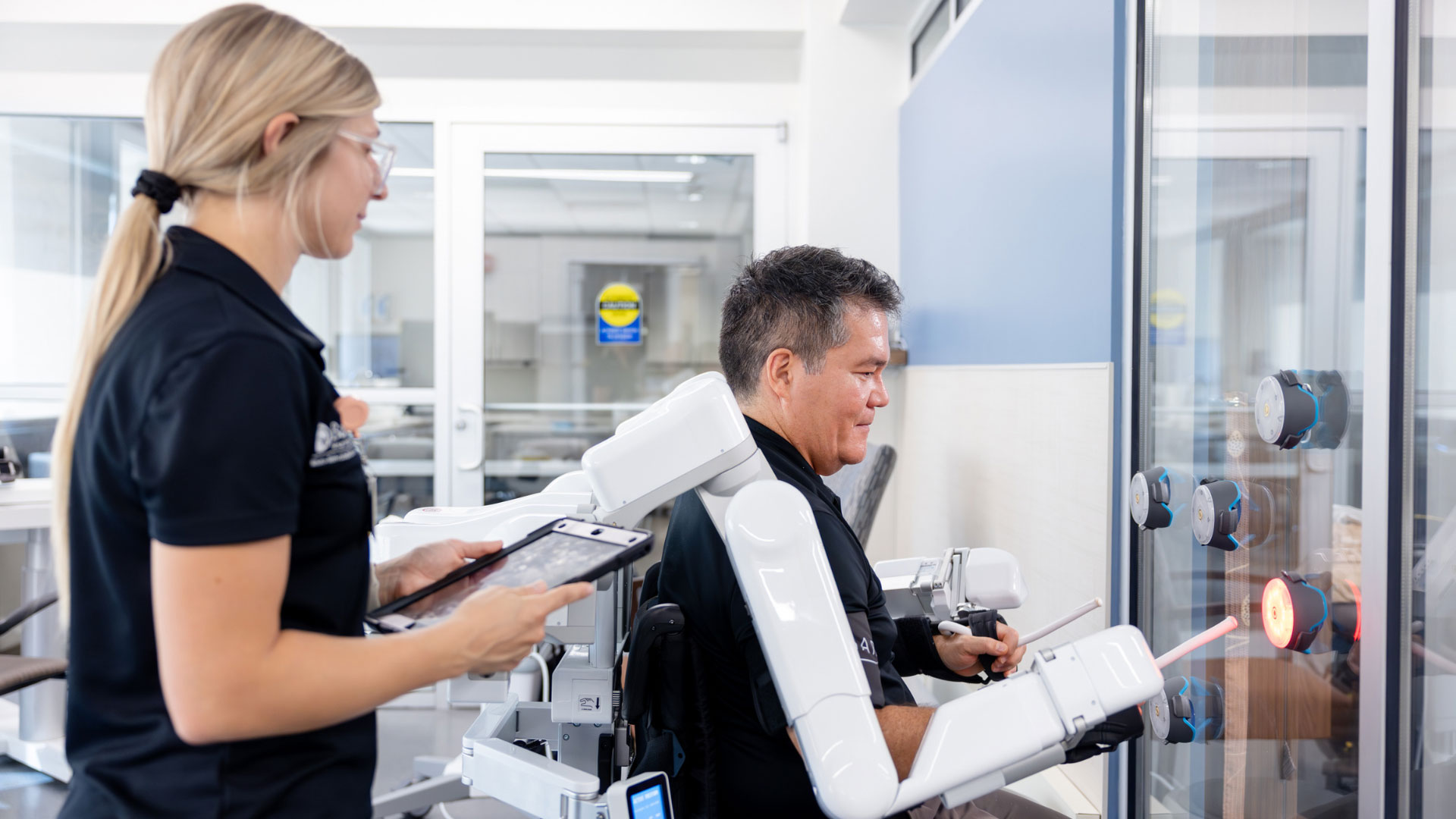
As a global leader in the use of robotics for neuro-rehabilitation, the Neuro-Rehabilitation Center at Barrow Neurological Institute harnesses the power of neuroplasticity to help patients return to activities with the highest levels of functioning and independence. The Center’s multidisciplinary team of experts can measure, support, and challenge patients’ abilities using robotics and technologies that complement conventional therapy throughout the entire continuum of care—acute, inpatient, and outpatient rehabilitation, as well as the Center for Transitional Neuro-Rehabilitation.
From the earliest stages of recovery in the hospital to after patients return home, robotics and technology play an essential role in neuro-rehabilitation and neuroplasticity.
- In the hospital, robotic devices can help patients begin moving safely—sometimes even within days of an injury or surgery—helping to prevent complications and stimulate the nervous system’s natural healing.
- During inpatient neuro-rehabilitation, robotic walking systems, upper-limb devices, and virtual reality programs allow patients to practice movement and balance with precision and repetition, accelerating recovery and building confidence.
- In outpatient neuro-rehabilitation, these technologies continue to track progress and challenge patients as they regain strength and independence.
- At home, wearable sensors, tele-rehabilitation platforms, and mobile apps can help patients stay active and connected to their care teams and support networks.
Across the entire continuum of care, robotics and technology empower patients to engage more fully in their recovery and help therapists deliver highly personalized, effective treatment.
The Future of Neuroplasticity Research
Emerging Studies and Findings
The field of neuroplasticity is a dynamic and rapidly evolving area of neuroscience. Emerging studies and findings are continually expanding our understanding of how the brain changes and adapts, paving the way for revolutionary treatments and devices. Advances in brain-computer interfaces (BCIs) are also leveraging neuroplasticity to allow individuals with paralysis to control prosthetic limbs or communicate through thought, demonstrating the brain’s incredible capacity to adapt to new forms of input and output.
People Also Ask
What is neuroplasticity? Neuroplasticity is the brain’s ability to change and reorganize itself throughout your life. It means your brain can form new connections, strengthen existing ones, or even prune unused ones in response to new experiences, learning, or injury.
How do I increase my neuroplasticity? You can enhance neuroplasticity by engaging in activities that challenge your brain, such as learning new skills or languages, regular exercise, maintaining a healthy diet, getting adequate sleep, practicing mindfulness, and ensuring meaningful social interaction.
How does neuroplasticity heal the brain? Neuroplasticity facilitates healing by allowing undamaged parts of the brain to compensate for injured areas. It enables new neural connections to form and existing ones to strengthen, helping restore lost functions such as movement, speech, or cognition after trauma or disease.
Your Support Advances Treatment with Neuro-Robotics
The Neuro-Rehabilitation Center is a leader in the use of neuro-robotics and therapeutic technologies, with 160 devices across the continuum of care. Funded by philanthropy, these technologies harness the power of neuroplasticity to help patients reach higher levels of functioning. Neuro-robotics also precisely and objectively measure patients’ progress, keeping them motivated and guiding their rehabilitation treatment plan.
For example, the robotic exoskeleton has given hope to hundreds of Barrow patients who thought they might never stand or walk again. Other devices at the Center help patients regain upper-body strength, fine motor skills, and swallowing function so they can return to everyday activities such as eating, drinking, brushing their teeth, and getting dressed.
Your support makes these advancements possible. Consider donating to Barrow Neurological Foundation today!