
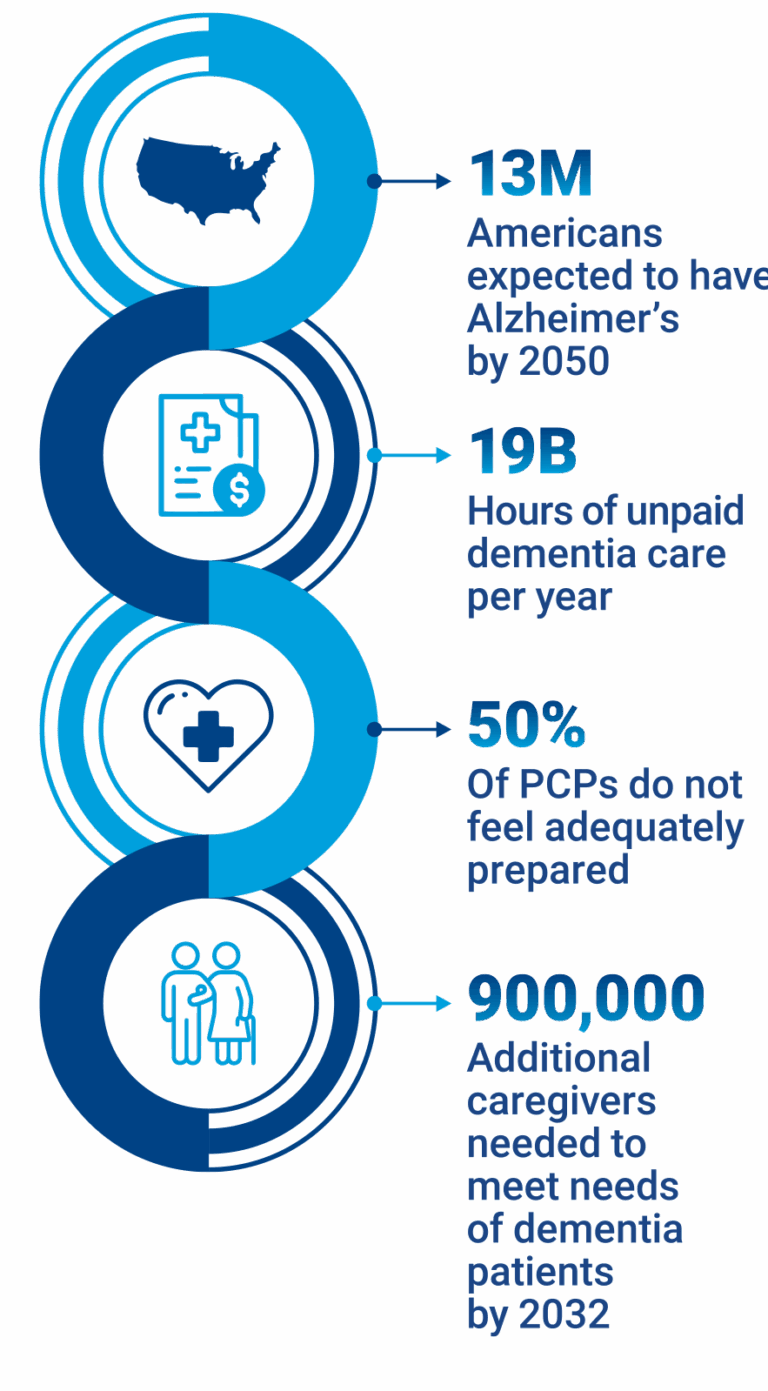
More than 7 million Americans are living with Alzheimer’s disease. As our aging population continues to boom, that number is expected to rise exponentially. Healthcare systems already face substantial challenges in meeting the needs of individuals with dementia, and the predicted surge in cases could be devastating—for patients, family members, and medical professionals.
The widespread delay in diagnosing patients with Alzheimer’s disease severely limits access to effective treatments. Although primary care physicians (PCPs) are in an ideal position to identify Alzheimer’s disease early, many feel that they do not have the training or resources to do so.
The Mounting Challenge of Delayed Diagnosis
Project Pegasus Takes Flight
Through a generous grant from The Davos Alzheimer’s Collaborative Healthcare System Preparedness Program and support from the Global Alzheimer’s Platform, Virginia G. Piper Foundation, and Simone Foundation, Barrow is pioneering a groundbreaking study to assess the impact of artificial intelligence (AI) on enabling earlier Alzheimer’s diagnosis.
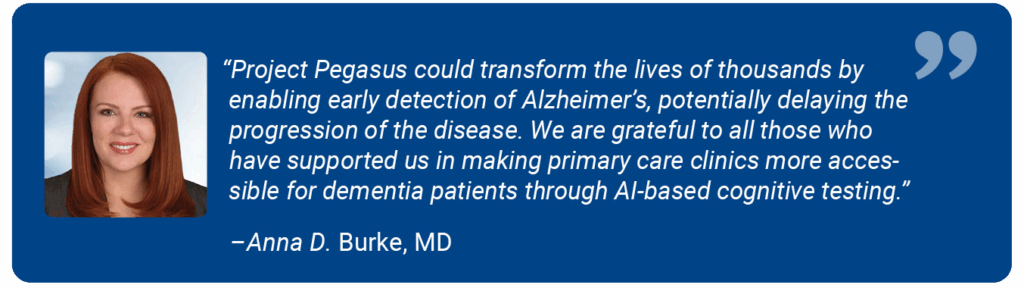
Led by Anna D. Burke, MD, Director of the Barrow Alzheimer’s & Memory Disorders Program, Project Pegasus will implement AI-based digital cognitive tests in primary care clinics. Patients who are identified with cognitive impairment will be referred to Barrow for a specialty assessment and a detailed treatment plan. Additionally, they will have access to the Alzheimer’s & Memory Disorders Program’s comprehensive outreach and support services.
This early diagnosis and referral method will afford patients better access to recently approved disease-modifying therapies and clinical research opportunities. The Peppertree Family Practice Center at St. Joseph’s Hospital and Medical Center is serving as the first primary care clinic for the study.