It was 1988, and a world of opportunity awaited 23-year-old Sarah Noonan (Neylon). She was living on her own, enjoying city life in Chicago, and had recently started a new job at an accounting firm. But one September night changed all of that.
Sarah was out with her friends when she slipped and fell down a flight of stairs, sustaining a traumatic brain injury (TBI) that left her in a coma for four days. Facing an uncertain future, she put her trust in the new Adult Day Hospital for Neurological Rehabilitation Program at Barrow Neurological Institute, now called the Center for Transitional Neuro-Rehabilitation (CTN), led by Pamela Klonoff, PhD.
Reclaiming Independence
When Sarah began the CTN program, she struggled with memory and language and experienced delayed processing and reaction times. To rebuild those abilities, she engaged in intensive cognitive retraining. However, she says that wasn’t the hardest part of her journey. “Before the accident, I lived independently, and that meant so much to me. Then, I had to move back to my parents’ home and rely on others for basically everything.”
Sarah expressed her frustration to the CTN’s recreational therapist, who helped her figure out bus routes to take to the program and to feel more confident going out into the community—giving her back some of the independence she craved.
Silent Struggles of a Brain Injury
Surviving a TBI altered Sarah’s life in unexpected ways. “Going through this, you feel so alone. People you thought were your friends start to fade. Even your family doesn’t really understand—they try, but it’s difficult,” she says. Working with neuropsychologist George Prigatano, PhD, emeritus chair of the Department of Neuropsychology, enabled Sarah to discuss these challenges.
Her peers also helped immensely. “The people I was with became my family. I felt like I could talk to them, and they’d understand. It was a true community, and that’s so important in healing,” she says. This is one of the CTN’s defining features. Focusing on holistic, milieu rehabilitation, it creates a supportive therapeutic community that addresses all aspects of recovery—physical, cognitive, and emotional.
From Patient to Occupational Therapist
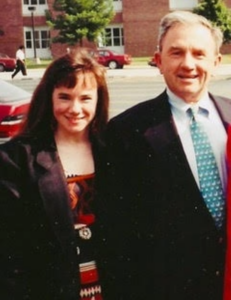
Sarah spent five months at Barrow before returning to Chicago. But her perspective on life had changed, and she began to think about pursuing a new career. Occupational therapy was at the top of the list. “I couldn’t think of anything more important than helping others get their independence back like my occupational therapist did for me,” she says.
Sarah applied to an occupational therapy degree program—and was accepted. In 1993, she graduated from the program, officially beginning her new career. “That was huge because my brain was still healing. I still can’t believe I did it under those circumstances,” she says. The experience taught Sarah not to let fear or doubt hold her back from living every day to the fullest.
Coming Back to Where it all Began
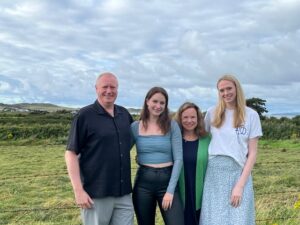
Last May—37 years after her accident—Sarah returned to Barrow and shared her story with participants at the CTN. “For a long time, I didn’t share my story because I was afraid that people would think less of me. But now, I want to show people that there is hope, and that you can live a full life after a brain injury,” she says.
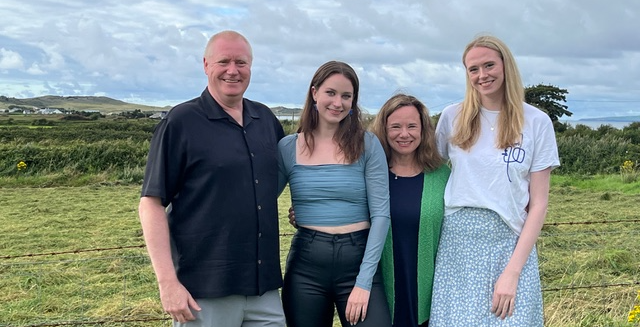
Sarah has certainly done that. She’s had a successful career, participated in triathlons, gotten married, and raised two wonderful daughters. “I truly believe the CTN saved me. I still don’t know how I would have made it without that program, and I will always be grateful,” she says.
This year, the CTN is celebrating its 40th anniversary of helping patients like Sarah reintegrate into their homes, communities, workplaces, and schools.
“Over the past 40 years, CTN’s healing milieu has helped survivors of acquired brain injuries rebuild their lives to become more compassionate, resilient, and inspiring versions of themselves, while finding renewed purpose and meaning in their core selves,” says Dr. Klonoff.
In honor of this milestone, please consider making a donation to the CTN. Your support helps ensure our specialists can continue providing life-changing care to those with acquired brain injuries.
Your support enables our physicians to accept the most challenging cases, push boundaries in research, and provide patients with life-saving treatments.
Related Stories