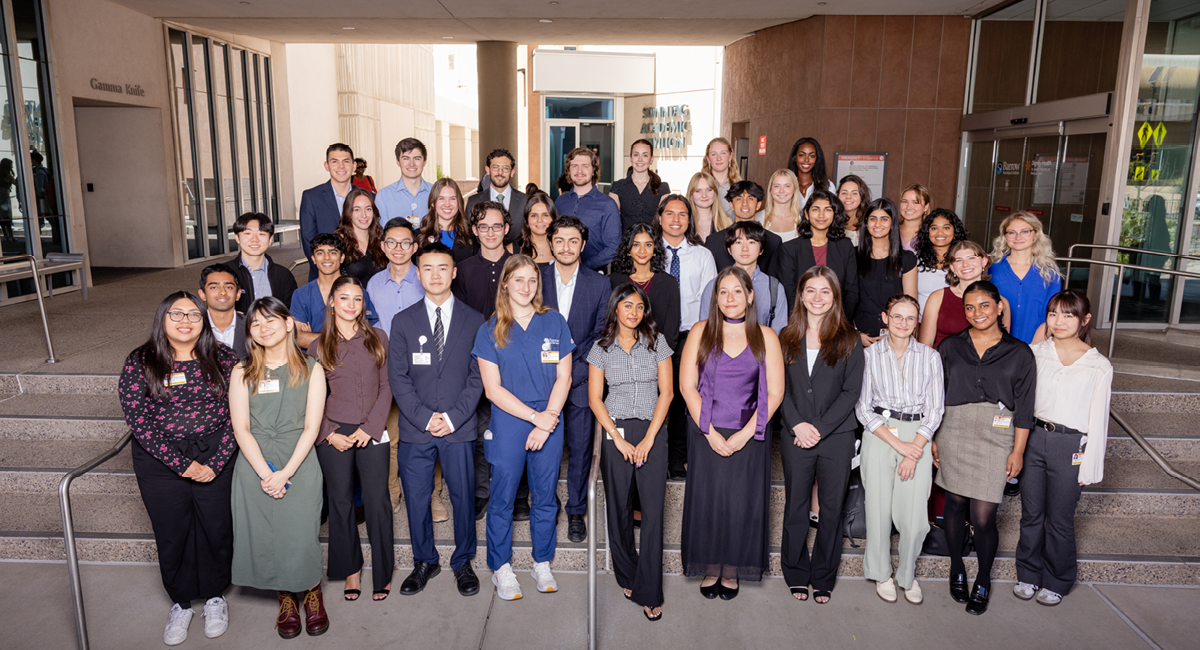
The Summer Undergraduate Internship Program at Barrow Neurological Institute offers aspiring student-scientists a unique, hands-on opportunity to immerse themselves in world-class neurological research. Thanks to the generous support of our donors, these students gain invaluable lab experience, mentorship from renowned specialists, participate in physician-led seminars, engage in technology workshops, and gain a foundational understanding of what it takes to pursue a career in neuroscience.
For the summer of 2025, we were proud to host a cohort of brilliant students from all around the world. We sat down with a our sponsored interns – Juliana Camino Castro, Ria Moharil, Garv Sharma, Karisha Sivakumar, and Steffi Verbeeck – to learn more about their experiences working on the front lines of neuroscience and the profound impact this program has had on their academic and career aspirations.
The students highlighted below were the recipients of scholarships from the Franke Global Neuroscience Education Center, the ALS Network, and the American Parkinson Disease Association. We are so grateful to these individuals and organizations for their support of Barrow’s mission to train the next generation of neuroscience specialists!
What was your favorite part of the program and what was your most memorable experience?
After completing the program, many of our summer interns report that the experience solidified their passion for pursuing a career in the neurosciences. Our interns reflect on the moments that stood out to them.
Juliana Camino Castro, Université fédérale de l’ABC, Brazil
“My favorite part of the program was when we talked with the other professionals here. On the first day of the program, Dr. Sattler shared with us that the reason she comes to the lab everyday is love. That was significant to me because I love science and I love coming to the lab to study it. To me, love is the most important part as well.”
Ria Moharil, Arizona State University
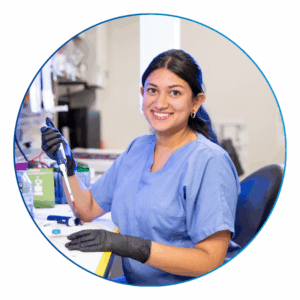 “My favorite part of this experience was definitely the talks. Twice a week, we got to hear talks from doctors and researchers, and I thought it was really insightful to be able to have a closer look into the field we are interested in and hear not just about research, but also how it relates to patient care.
My most memorable experience has been the Undergraduate Symposium where we presented our research projects. It was cool to see what all the other interns have been working on and how different all of our projects were!”
Garv Sharma, University of Arizona
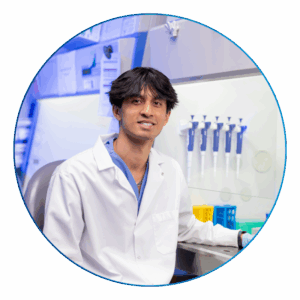 “My favorite part of the program was presenting the findings from my research that I worked on for the two months I was at Barrow. As you know, science is something that has a lot of successes and a lot of failures, and I had a lot of both. It was nice to show my findings from the lab, but it was also nice to show the sheer amount of work that my mentor and I put into the project.
This speaks directly to my favorite part of the program, which is the collaborative environment. The Sattler Lab and the community as a whole is so engrained and they made me feel appreciated. It’s something I will forever be grateful for.”
Karishma Sivakumar, Boston University
“The most memorable experience I had was getting to shadow my mentor, Dr. Racette, at the Muhammad Ali Parkinson Center. He was really generous with his time, and he let me ask so many questions. He gave really thoughtful answers, and it was very educational and inspirational to see him talking with his patients and managing their treatment. His neurological examinations were so meticulous – it’s something I admire, and it was great to have the opportunity to observe his interactions with patients.
In the classroom, we talk a lot about theory, but it’s never the same as getting to learn firsthand. We talk about the mechanisms and the biology behind Parkinson’s disease, but when the doctor actually sees the patients, he is able to prescribe medications and speak to their effects, and let patients know how often they should come back to the clinic to see him. It’s a really intensive process managing a patient with Parkinson’s disease, and it requires tailoring dosages most suitable for each individual.”
Steffi Verbeeck, Universidad Autónoma de Guadalajara
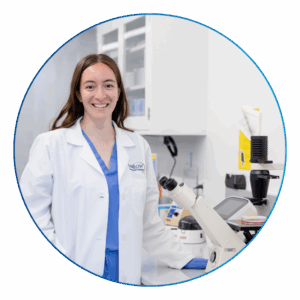 “My favorite part of the program was being at the lab with the people that I met. The interactions I had with everyone that was directly involved with me or of the other labs that are part of the Ivy Brain Tumor Center. I think that interaction was just amazing. As for memorable moments, I made a lot of syringes as part of my project. I think I did 10,000 syringes in total.”
What part of the learning experience did you benefit from the most?
Moving from the textbook to the laboratory is a transformative experience filled with challenges and discovery. Our interns share what experiences they feel best prepared them for a career in the neurosciences.
Juliana Camino Castro’s Key Learnings
“I learned that you need to look at all avenues of science, such as computational, biological, and cognition. In my lab, we had the freedom to try things. So, I had the freedom to ask questions and look for the answers. I also learned about the different lab techniques and how to work with a team.”
Garv Sharma Has Fun in the Lab
“I benefited the most from learning about lab techniques. That was something that I would not have been able to learn anywhere else. Not only did I learn it, but I was also able to apply it, which is something that is very important. It didn’t feel like a learning experience – it felt like something that I had fun doing!”
Karishma Sivakumar Learned Cutting-Edge Therapies and More
“The part of the learning experience I benefited the most from was the two weekly seminars that all of the interns attended. It was really helpful to see the cutting-edge therapies and novel technology that is being used in neuroscience. It really helped inform my career decision going forward, and it was good to know that those options are available for patients.”
Steffi Verbeeck’s Passion for Brain Tumor Research
“I learned so much. But, if I have to choose one thing specifically, it would be that I got the opportunity to shadow doctors at Ivy Brain Tumor Center, which was really interesting for me. Also, working with Dr. Mehta and everything brain tumor-related in general are something that I am very passionate about.”
Will you speak about your Barrow mentor and how they helped you throughout this program?
Students in the program work in a research laboratory under the mentorship of a world-renowned Barrow scientist. Our sponsored students share how their Barrow mentor guided them in all aspects of this internship – from technical lab skills, to presentation skills, and general support.
Juliana Camino Castro, mentored by Tomoki Hashimoto, MD
“My Barrow mentor was Tomoki Hashimoto, MD. Dr. Hashimoto is amazing. He gave me support when I missed my family, and he listened to me when I needed help on something. He really helped me learn, and I learned so much about aneurysm research. I don’t have enough words to say thank you to everyone for the opportunity to be here.”
Ria Moharil, mentored by David Medina, PhD, and Robert Bowser
“My Barrow mentor was David Medina, PhD, and I worked under him and Giselle Quezada, a research technician in the Bowser Laboratory. They were very helpful in guiding me through the techniques and the reasoning behind our experiments. Initially, it doesn’t make sense to do an experiment if we are not understanding the ‘why’ and the bigger story behind it.
Giselle was very helpful and patient in guiding me, and Dr. Medina was there to ask or answer any questions. He would send me research papers, which gave me a good understanding of the field as a whole, rather than just performing specific tasks for the job. I think the best part of this program is that I was fully integrated and was able to learn and visualize many different new techniques.”
Garv Sharma, mentored by Rita Sattler, MSc, PhD, and Kim Preller
“My Barrow mentors were Rita Sattler, MSc, PhD, and Kim Preller, MS. They were great and supportive from day one. It was amazing to have them as mentors because not only was I able to ask questions, but they were also easy to talk to. I feel like having that is something that is really helpful, especially when it comes to a mentor/mentee dynamic. They taught me a lot of lab techniques that I was able to apply. So, thank you to my mentors. This experience would not have been the same without them.”
Steffi Verbeeck, mentored by Shwetal Mehta, PhD
“Dr. Mehta was the best. If I had any questions, we would have meetings about it. She was always there for me, especially in the last few weeks of the program when I knew I would have to give an oral presentation. She really inspired me to give the best I could, which I am very grateful for because she made me a better presenter in general. This is not something I expected to happen, but it did, and I’m so grateful for it.”
Thank you to the sponsoring organizations!
Juliana Camino Castro, sponsored by the Franke Global Neuroscience Education Center
“Thank you to the Franke Family. This is a huge opportunity being here in this program – and this experience has been perfect. This program made me sure that I would like to study science. I want to explore, and I want to make a difference and help people.”
Ria Moharil, sponsored by the ALS Network
“I would like to thank the ALS Network for making this whole internship possible and for funding my research! I really appreciate everything that the ALS network has done for me.”
Garv Sharma, sponsored by the American Parkinson Disease Association (APDA)
“Thank you to the APDA! Thank you for making this experience possible for me, for funding it, and for always having my back!”
Karishma Sivakumar, sponsored by the American Parkinson Disease Association (APDA)
“Thank you to the ADPA for supporting me throughout this internship!”
Steffi Verbeeck, sponsored by the Franke Global Neuroscience Education Center
“I want to thank the Franke family for giving me the opportunity to come here to Barrow, and for giving me the opportunity to learn from people that are renowned in their fields. Thank you.”
Please note: Some responses have been edited for style and clarity.